
Spinal Decompression Therapy: What to Expect at IMCC
TL;DR
- Non-Surgical Relief: spinal decompression is a painless, FDA-cleared treatment designed to relieve pressure on the spine and promote healing of herniated or bulging discs.
- What It Feels Like: Most patients experience a gentle stretching sensation and often find the sessions so relaxing they fall asleep during treatment.
- Local Expertise: Integrated Medical & Chiropractic Centers (IMCC) has served the Inland Empire since 1952, offering this advanced therapy at 10 convenient locations including Corona, Riverside, and Temecula.
Introduction
If you are living with chronic back pain, every move can feel like a challenge. Whether it is a sharp pain shooting down your leg or a dull ache that prevents you from enjoying a walk through the Citrus State Historic Park in Riverside, spinal issues can significantly diminish your quality of life. Many residents across the Inland Empire believe that surgery is their only option for long-term relief from disc-related injuries. However, non-surgical spinal decompression therapy has emerged as a highly effective, non-invasive alternative that helps patients return to their daily activities without the risks or downtime associated with the operating room.
At Integrated Medical & Chiropractic Centers (IMCC), we have been a pillar of the Southern California healthcare community since 1952. We understand that pain is personal, which is why we treat every patient like a member of our own family. Our integrated approach combines the best of Western medicine with proven alternative therapies to address the root cause of your discomfort. In this guide, we will walk you through exactly what to expect from spinal decompression therapy, helping you make an informed decision about your spinal health.
What is Spinal Decompression Therapy?
Spinal decompression is a type of motorized traction that works by gently stretching the spine. This process changes the force and position of the spine, which takes pressure off the spinal disks—those gel-like cushions between the bones in your spine. By creating negative pressure within the disc, the treatment allows bulging or herniated discs to retract, taking pressure off nerves and other structures in your spine.
The Science of Healing
When the spine is gently elongated, it creates a vacuum effect known as intradiscal pressure reduction. This not only helps the disc material move back into place but also promotes the movement of water, oxygen, and nutrient-rich fluids into the disks so they can heal. Unlike traditional traction, which can sometimes trigger muscle spasms, modern spinal decompression systems use computer-controlled technology to bypass the body's natural guarding response, ensuring a smooth and effective stretch.
Your First Session: A Step-by-Step Experience
Walking into a clinic for a new procedure can feel intimidating, but at IMCC, we prioritize your comfort from the moment you enter one of our locations. Here is what a typical session looks like:
1. Preparation and Positioning
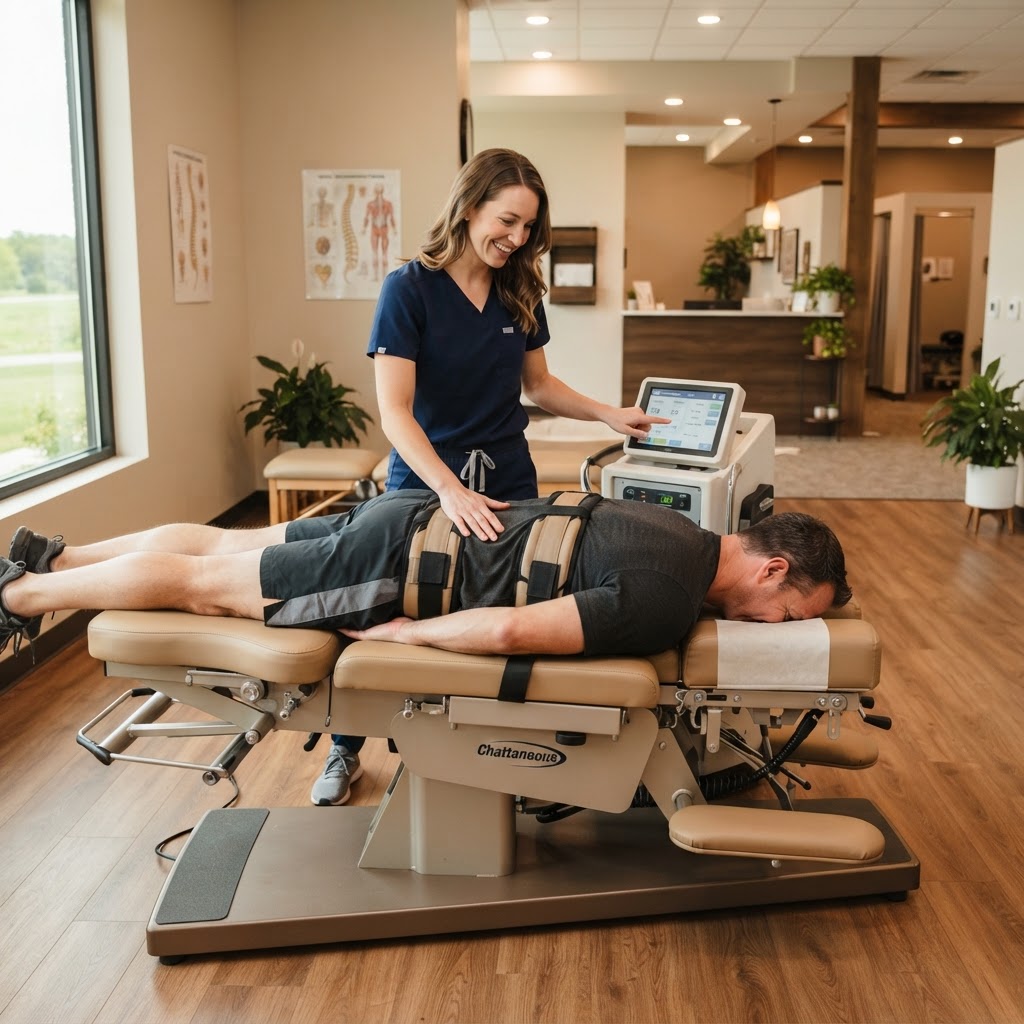
During your session, you will remain fully clothed. Your provider will fit you with a specialized harness that goes around your hips and another around your torso. You will lie down on a computer-controlled table. Depending on whether your pain is in your lower back (lumbar) or neck (cervical), you will either lie face up or face down. At our clinics in Corona CA and surrounding Riverside County cities, we ensure the table is padded and adjusted specifically for your body type.
2. The Treatment Cycle
Once you are comfortable, the doctor or technician operates the computer, inputting a protocol tailored to your specific condition. You will feel a gentle pull as the table moves. The system alternates between periods of distraction (stretching) and relaxation. This cycle is what creates the "pumping" action that rehydrates the discs. A standard session typically lasts between 30 to 45 minutes.
3. The Sensation
Most patients report that the sensation is quite pleasant. It feels like a deep, slow stretch. Because the computer is so precise, it avoids the jerky movements that might cause discomfort. In fact, many of our patients in the Inland Empire find the environment so soothing that they take a nap while the technology does the work.
Conditions Treated and Expected Results
Spinal decompression is a versatile tool in our integrated medical toolkit. It is most effective for conditions that involve disc compression or nerve impingement. This includes:
- Herniated or Bulging Discs: Often the result of wear and tear or injury.
- Sciatica: Pain, weakness, or tingling that extends down the leg.
- Degenerative Disc Disease: The breakdown of discs due to aging.
- Spinal Stenosis: Narrowing of the spaces within your spine.
- Posterior Facet Syndrome: Worn spinal joints.
How Many Sessions Will I Need?
While some patients feel relief after just a few visits, a full course of treatment usually involves 15 to 30 sessions over several weeks. We often combine this therapy with chiropractic care or physical therapy to strengthen the supporting muscles and ensure the spine remains in proper alignment long after the decompression sessions are complete.
Why Choose a Non-Surgical Approach?
Surgery, while sometimes necessary, carries risks such as infection, blood clots, and long recovery times. Spinal decompression offers a way to address the mechanical cause of back pain without an incision. There is no recovery time needed after a session; you can simply get off the table and continue with your day in Southern California. Furthermore, it is significantly more affordable than surgical intervention and is often covered by various insurance plans.
How IMCC Can Help
Choosing where to receive your care is a significant decision. At Integrated Medical & Chiropractic Centers, we offer a unique advantage: an integrated medical model. We don't just look at your spine in isolation. Our team, which includes experts in chiropractic adjustment, medical practitioners, and therapists, collaborates to create a holistic recovery plan.
With 10 locations across the Inland Empire—including Chino, Hemet, Lake Elsinore, Murrieta, Riverside, San Bernardino, Temecula, and Wildomar—expert care is never far from home. Beyond spinal decompression, we offer a suite of services like acupuncture, shockwave therapy, and medical weight loss to help you achieve total wellness. Since 1952, our philosophy has remained the same: treat patients like family and provide the highest quality integrated care available.
Take the First Step Toward a Pain-Free Life
You don't have to let back or neck pain dictate your schedule or limit your time with family. Our experienced our providers are ready to help you discover if spinal decompression is the right solution for you. Whether you are in Corona, Riverside, or any of our other Inland Empire communities, relief is closer than you think. contact us today at 1-800-595-2447 or schedule an appointment online to start your journey back to health.
FAQ: Spinal Decompression Therapy
Is spinal decompression therapy painful?
No. Most patients find the treatment very relaxing. The computerized system is designed to apply force gradually, preventing the body's muscles from tensing up. If you do feel any discomfort, the system has a safety switch that allows you to stop the treatment immediately.
How is this different from a regular traction table?
Traditional traction tables apply a steady, continuous pull. This can sometimes cause the back muscles to go into spasm as they "fight" the stretch. Modern spinal decompression uses sensitive computer technology to cycle between pulling and relaxing, which tricks the muscles into staying relaxed, allowing for deeper healing of the discs.
Can I go back to work after my treatment?
Absolutely. One of the biggest benefits of this therapy is that there is no downtime. Most patients go straight back to work or their daily activities immediately following their session at our Inland Empire clinics.
Is spinal decompression covered by insurance?
Many insurance providers do cover spinal decompression when it is deemed medically necessary. Because we offer an integrated approach, our team can work with you to determine your coverage options. Please book a consultation so we can review your specific plan.
Who should not have spinal decompression therapy?
While it is safe for most, it is not recommended for pregnant women, or individuals with certain conditions like advanced osteoporosis, spinal fractures, or metal implants in the spine. A thorough evaluation at any of our find a location sites will determine if you are a safe candidate.